“For me, running is both exercise and a metaphor. Running day after day, piling up the races, bit by bit I raise the bar, and by clearing each level I elevate myself. At least that’s why I’ve put in the effort day after day: to raise my own level. I’m no great runner, by any means. I’m at an ordinary – or perhaps more like mediocre – level. But that’s not the point. The point is whether or not I improved over yesterday. In long-distance running the only opponent you have to beat is yourself, the way you used to be.”
– Haruki Murakami, “What I Talk About When I Talk About Running”
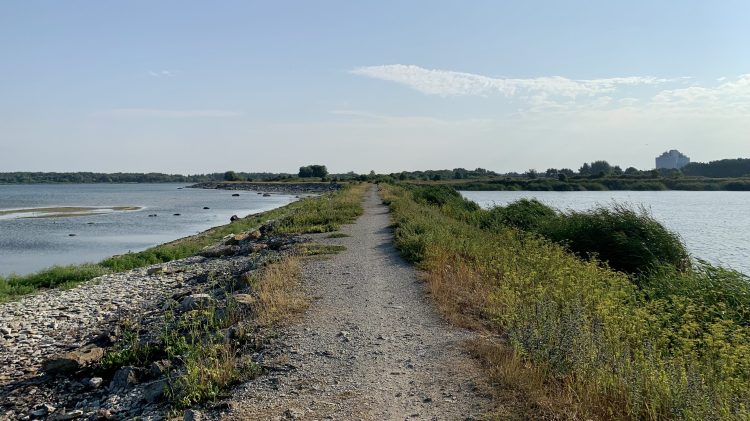
Seven months into this huge relocation of my whole life, managing the daily adventures of being a new dad, and going through some of the most hectic weeks I’ve ever had at work. That was the situation when I decided to run my first marathon. To make it even more interesting, I also picked one that was about 90 days away. A recipe for disaster? Well, somehow I thought the timing was perfect.
As I reflected while writing this, I came up with an explanation. Now I have a theory about how I could possibly think that this was a reasonable thing to do. We all know, people naturally look for stability and predictability: we avoid change as much as we can. And to me, at that point, stability meant keeping the chaos going and pushing things hard. I think it would take more (mental) effort to slow down than to keep the momentum going. So from that perspective, signing up to run 42.2 km on a Sunday sounds pretty consistent and logical.
Or—let’s admit it—I was starting to go crazy.
To be honest, I didn’t come up with the idea on my own. I was heavily motivated by the person that usually gets me into this type of situation: my ultramarathon runner wife. As soon as she learned that the Tallinn Marathon was a couple of months away and she wouldn’t be able to run it, I was the next best thing. “Come on, you can do it! It’s all about your mindset.” The problem was that my mind was doing the math and it didn’t add up. Appealing to it wasn’t the way to go.
Anyway, I really like running and the idea of being an actual marathon runner got me pumped up. And she insisted: “if you can run a marathon, you can do anything!” Gradually I was starting to feel it – but could I pull it off? I began by doing what I always do: I bought a book. I sprinted through Marathon: The Ultimate Training Guide in three days and its 18-week novice training program seemed doable. It consisted of three easy(er) runs during weekdays, one day of cross-training, and—most importantly—a long run on weekends. The problem was that I didn’t have that amount of time until the race, so I would start almost in the middle of the program. And that meant a 21.1 km run was already waiting for me on the very first Sunday.
Up to that point, I had been running about 3 or 4 days a week, but nothing nearly close to that. I had run a half marathon once, but that was a long time ago and it was hell: my knee was badly injured and it took me almost 2 months to recover. Now I had to do it again and it was just the beginning. “Well, maybe that’s good”, I thought. “If this is not for me, I’ll know it pretty fast.” By the way, it’s also important to note that the summer was awesome. Hot days, clear skies, and the sun shining 20 hours per day. The kind of weather that just begs for a long run! (Especially after the winter I had.)

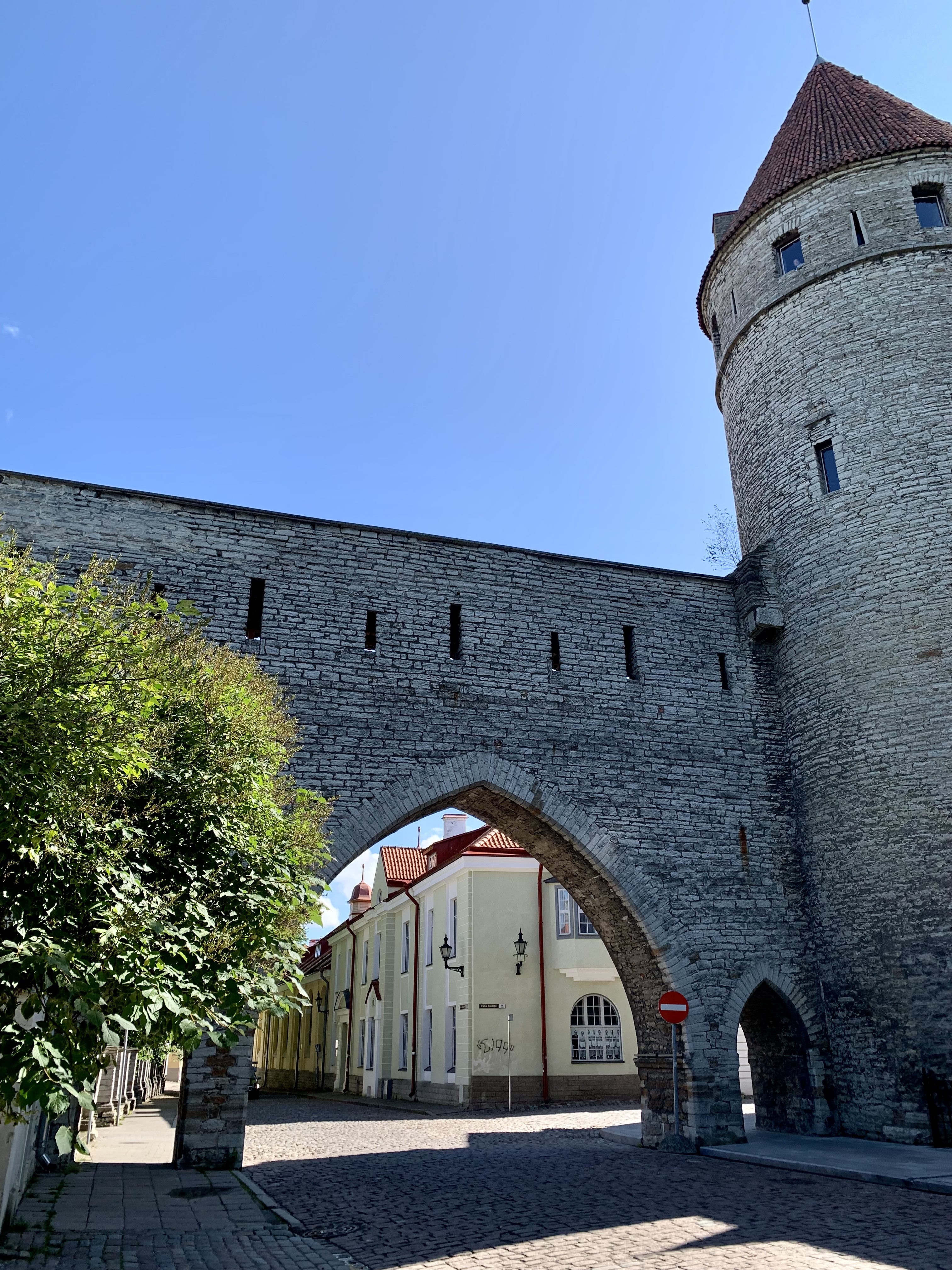
To get me even more motivated, I built routes that went through parts of the city I wanted to see. Instead of hours of hard workouts, I looked at each run as an opportunity to explore Tallinn. For instance, that 21k run went past the Old Town and the Port of Tallinn and had a 7k trail segment within the forest surrounding the Pirita River. To finish it up, a jump in the freezing waters of Pirita Beach to refresh and ease any pains I surely was going to have.
Somehow the plan worked and I managed to do it. And not only that, I ran above the half marathon distance another 5 times during the training. Consistently raising the goal every other weekend, I eventually hit the peak 32k mark. It was unbelievable. With two knee surgeries, I thought these extreme sports were no longer for me. Now, I was learning the power of discipline, planning, and training (and of probably not thinking straight).
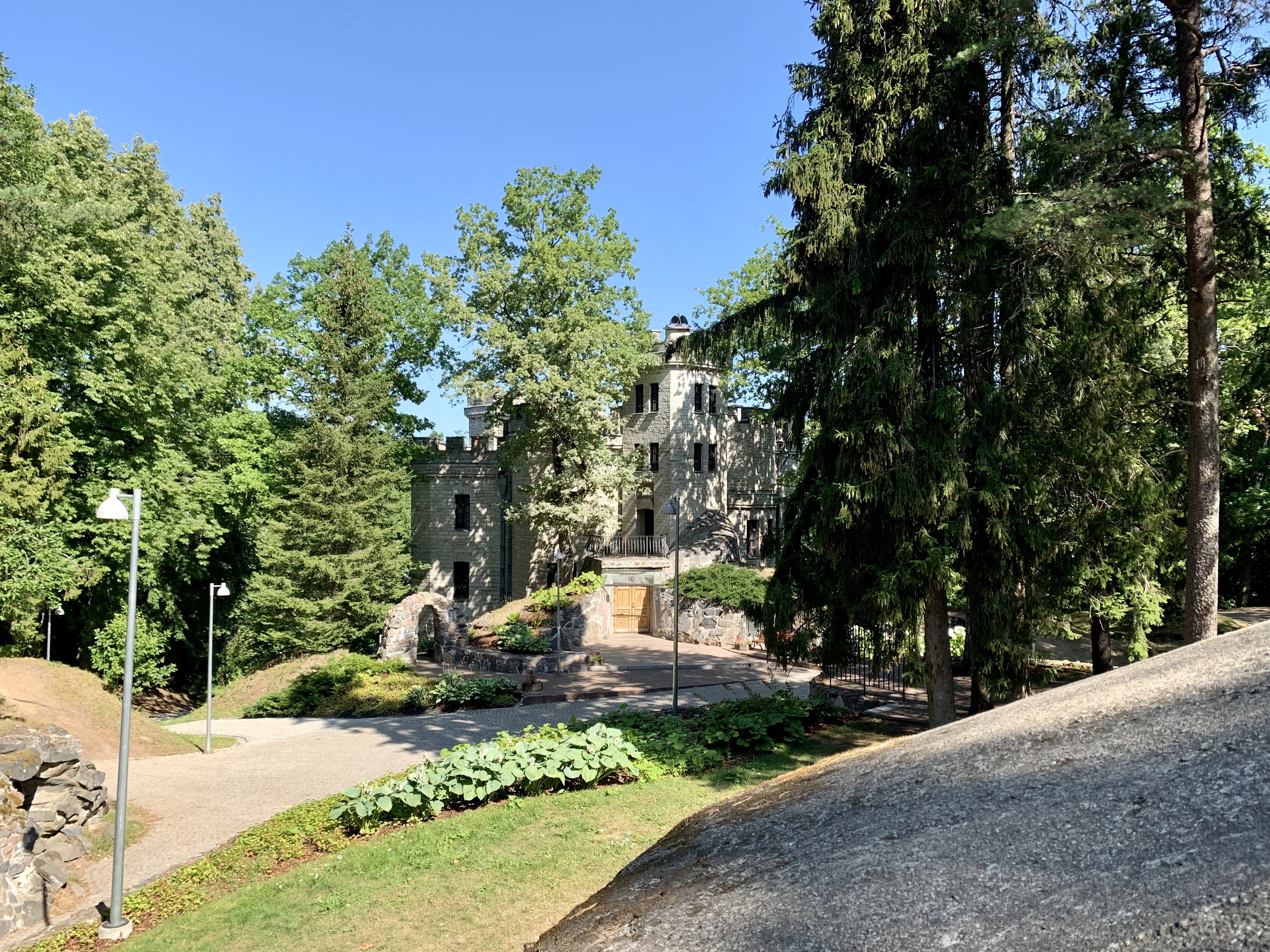
I was mostly having a good time. As Tallinn is relatively small, running that kind of distance can get you to some really remote places. I saw lakes, forests, huge houses, small castles, beaches, parks. Every Sunday I would wake up, check the route on my running app, imagine what it would look like – and then run out to see it myself.
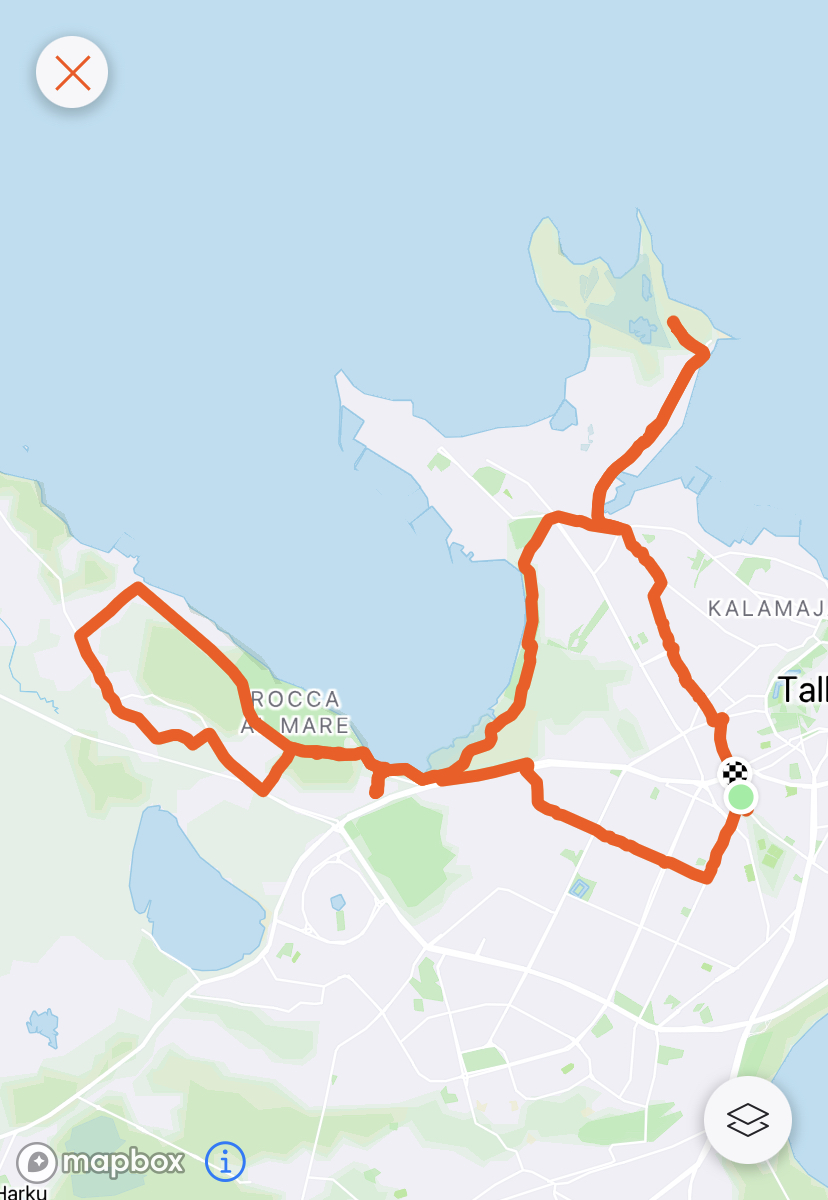


The route plans worked so well that I was barely noticing my own improvements. I remember one day arriving home a little disappointed after almost 3 hours, and hearing myself say “weak day… just 23k”. My wife laughed, “just 23?” — Well, the goal was 25.
To be sure, there were moments when I became very aware of the sort of distance I was running. “Learn to live with pain, and you will never be alone” is a quote that long-distance runners might know and relate to. Man, the pain is real. I’m not a hard-to-wake-up type of person, but taking that first step out of bed every morning was tough. Your feet get destroyed as you increase your training from 20 to 50 km a week. During the most painful times, I would pay attention to my body deeply and try to see where my movements could be wrong. As you strike the ground thousands of times per hour, even minor things become big issues. And it works both ways, so I was trying to find any small improvements that would make my life better there.
I also learned the importance of resting: to get far, you have to make some stops along the way and be still. Learning to heal – and the importance of it – was absolutely critical. There was one week when I caught a minor cold. Instead of forcing myself to run (and make it worse), I forced myself to stay at home. No running for 6 days in a row and by Sunday I was back in the streets to do a 22k. Just like eating or going to work, recovering became part of my routine: full body stretches a couple of times a day, reusable ice packs where ice cream would be in my freezer, and an occasional sip of ibuprofen for breakfast. Still today, physiotherapy videos are among the top recommendations for me on YouTube.
People use the analogy “it’s a marathon, not a sprint” to describe things that take more time than others. I used to do that too, but now I understand that it completely misses the point. Marathons are not about more time or distance: they are a completely different thing. It is body and mind facing all sorts of challenges every single day for months. Sticking to the training plan required from me a whole other level of commitment, discipline, and resilience. I remember thinking about giving up during all my long runs. But I didn’t. Rain or shine, over those two months or so, I ran about 450 kilometers for more than 50 hours. When you look at it this way, you notice that the actual marathon is like 10% of the story.

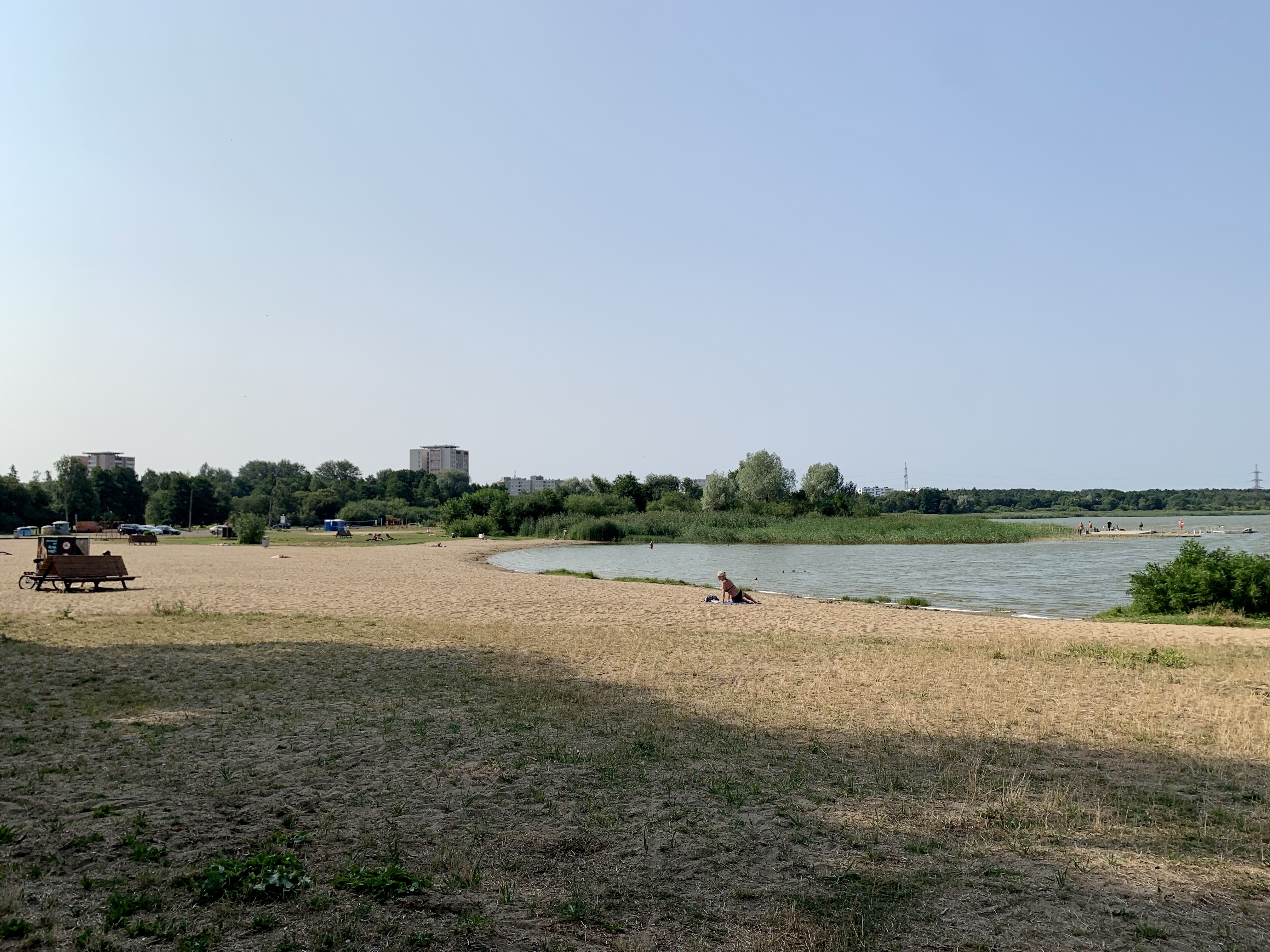

The day before the race, I was walking to the marathon expo to get my runner kit with my wife and son. She had a big smile on her face, her eyes were sparkling. She said she was proud of me and that all these training days were beautiful. An interesting choice of words, I thought. I wouldn’t have used “beautiful” to describe those gruesome, hard days. But then it dawned on me how far I’ve come, and that the whole thing had really been a huge journey, where the person that began it was not the same one finishing it. For every time I thought I had reached my limits, there was a time where I overcame them. Now I wasn’t so sure about where my limits were anymore. Maybe this is what marathons are all about, I thought. I smiled back at her, and she continued: “now you can just enjoy the ride, and we will be there supporting you.”
I felt my mission was accomplished. I felt relaxed and confident. I felt high. As I walked into the marathon expo, I saw the starting line facing the sea under a bright sunny day. Yes, I thought, beautiful was the right word to describe it after all.
• • •
It was cold, rainy, and very windy. But after everything I’ve been through, at that point I thought this was just the right landscape for the final chapter. It was race day.
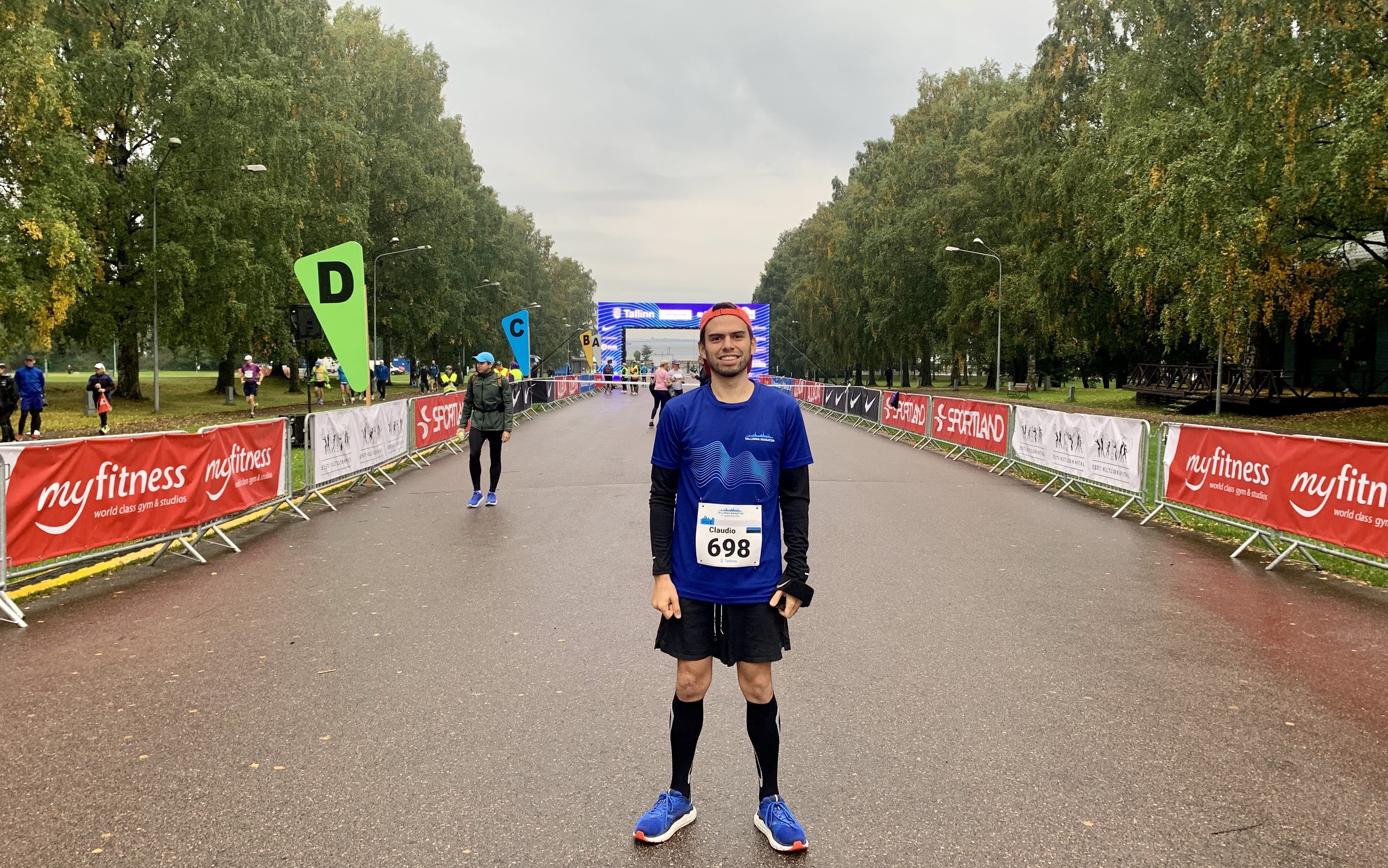
Turns out there was quite a lot of crazy enough people in Tallinn that day, probably going through their own crazy journeys, looking forward to a long run on such a pleasant day. The atmosphere was calm and electric at the same time. My family had to stay at home until the rain stopped, so I arrived alone. But other than that, it was exactly how it was supposed to be. I was rested, focused, ready. And it was actually cool to be there by myself with everyone, you know, just us marathon runners hanging out, moving around, killing it.
A few minutes away from the start, as I was lining up, I suddenly heard a familiar voice. On the sidelines, I spotted my wife with my 1-year-old son holding a sign written: “my daddy is a hero”. They supported me the whole way – of course they would be there! The timing was so perfect that it seemed planned: they waved at me just as the start of the race was announced. And with that, I began my last long run: the final 42.2k of this long and challenging adventure.
The rest of the story was exactly how you would expect: pain, sweat, and tears. My family was there the whole way supporting me with vitamin water, snacks, and painkillers. Some friends from Bolt also showed up to cheer and boost me up in the end. And it was awesome to see the Estonian people in the streets clapping and shouting motivational words as we passed by (I didn’t understand them, but I could feel it).
After 5 hours and 11 minutes, I crossed the finish line with a big smile on my face. Not a bad thing considering I had just done the hardest thing I ever did in my life. To give you an idea of the effort, I actually couldn’t sleep that night due to the pain in my legs. But, man, was I happy. For the next few days, I felt big and confident and unstoppable (despite the fact I could barely walk). It is true what they say: it does feel like you can do anything.
I felt like doing it again.

 Claudio Maksoud Filho